
What is Bitcoin? A plain-English guide for 2026
Where Bitcoin came from, how it actually works, and what it is (and isn't) good for
Almost everyone has heard the word "Bitcoin." Far fewer can say what it actually is — and the gap is where most confusion, and most bad decisions, come from. This guide fixes that. No hype, no price predictions: just a clear picture of what Bitcoin is, how it works under the hood, and what it's genuinely useful for.
The one-sentence version
Bitcoin is money that runs on the internet instead of through banks — a system where you can hold and send value that no company, government, or person can freeze, seize, or print more of.
That's the whole idea. Everything below is detail.
Where it came from
In October 2008, in the middle of a global banking crisis, an anonymous person or group using the name Satoshi Nakamoto published a nine-page document titled "Bitcoin: A Peer-to-Peer Electronic Cash System." The timing wasn't a coincidence. Trust in banks was collapsing, and the paper proposed something radical: a form of money that didn't need a trusted middleman at all.
The network went live in January 2009. Embedded in its very first block, Satoshi left a headline from that day's Times of London — "Chancellor on brink of second bailout for banks." It reads like a mission statement, and Bitcoin has pursued that mission, unchanged in its essentials, ever since. Satoshi disappeared in 2011 and has never been identified. Nobody "runs" Bitcoin today.
How it actually works
Three ideas do all the heavy lifting.
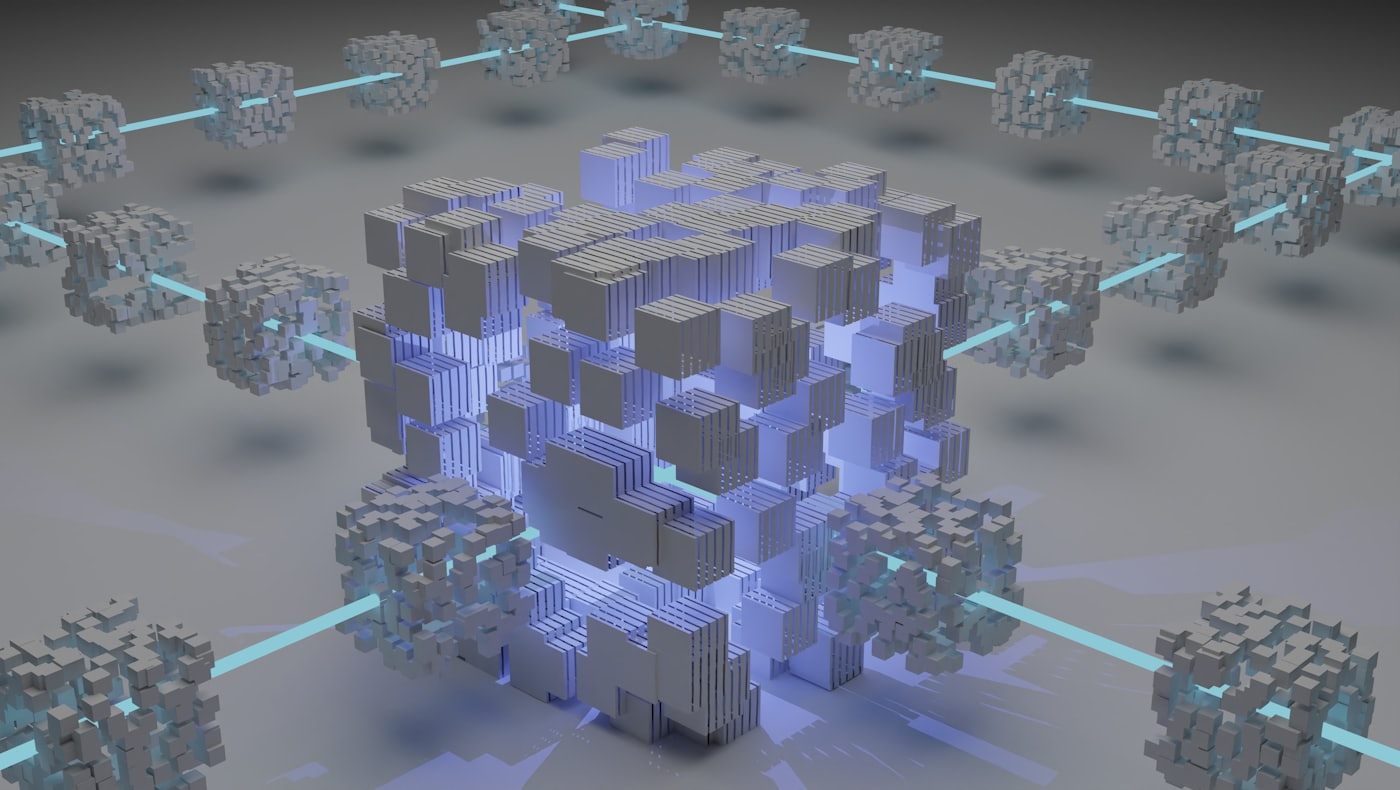
1. A shared ledger. Instead of a bank keeping a private record of who owns what, Bitcoin keeps one public ledger — the blockchain — that thousands of computers around the world each store a full copy of. When you send Bitcoin, you're not moving a file; you're broadcasting an update that everyone's copy of the ledger agrees to record.
2. Keys, not accounts. You don't have a Bitcoin "account" with a username and password. You have a private key — a secret number — and an address derived from it that you can share to receive funds. Control of the key is ownership. This is the origin of crypto's most important saying: "not your keys, not your coins."
3. Mining and the 10-minute heartbeat. Roughly every ten minutes, computers called miners compete to bundle recent transactions into a new block and add it to the chain. Winning requires spending real electricity on a guessing game (called Proof of Work), which makes rewriting history astronomically expensive — you'd have to out-compute the entire honest network. In return, the winning miner earns newly created bitcoin plus transaction fees. This is also the only way new bitcoin enters circulation.
Why the 21 million number matters
Bitcoin's supply is capped at 21 million coins, written into the rules and enforced by every participant. Roughly every four years, an event called the halving cuts the rate of new supply in half. We're now well past 19.5 million mined, and the last coin won't appear until around the year 2140.
Compare that to traditional money, which central banks can create more of at will. That fixed, predictable scarcity is the single biggest reason people describe Bitcoin as "digital gold" — a place to store value that can't be quietly diluted. Whether that store of value holds up is a matter of adoption and opinion; the scarcity itself is simply math.
What Bitcoin is good at
- Holding value outside the banking system. No bank can close your Bitcoin, and no border stops it.
- Sending value globally. A transfer to the other side of the world settles in minutes to an hour, regardless of banking hours or holidays.
- Censorship resistance. For people in unstable economies or under capital controls, "permissionless" money isn't a slogan — it's the whole point.

What Bitcoin is not
Being honest about the limits is what separates understanding from hype:
- It's not a company or a stock. There's no CEO, no earnings, no dividend. Buying bitcoin isn't buying a share of anything.
- It's not fast or free for tiny payments. During busy periods, fees rise and confirmations take longer. Bitcoin is better suited to storing and settling meaningful value than to buying a coffee.
- It's not private by default. The ledger is public. Your identity isn't attached to an address automatically, but transactions are permanently visible to anyone.
- It's not a guaranteed profit. The price is volatile and unpredictable. Anyone promising returns is selling something.
Understanding fees before you send
Every Bitcoin transaction pays a fee to the miners who secure the network, quoted in satoshis per virtual byte (sat/vB) — a satoshi being the smallest unit, one hundred-millionth of a bitcoin. When the network is busy, fees climb; when it's quiet, they fall to a few cents.
The practical takeaway: if a transfer isn't urgent, send it when the network is calm. You can watch live Bitcoin fee levels — slow, normal, and fast tiers — right on the swap page before you commit, and keep more of your coins.
Getting your first bitcoin, safely
You don't need an exchange account to own Bitcoin. With a non-custodial swap, you can convert another asset directly into a wallet you control. A sane first-timer checklist:
- Set up a wallet and write down its recovery phrase on paper — never a screenshot, never the cloud. Those words are your money.
- Copy your receiving address carefully. Bitcoin addresses start with
bc1,1, or3. On-chain transfers can't be reversed, so double-check. - Do a small test first for any large amount.
- Check the live Bitcoin price so you know the market rate going in, then start a swap.
Once it arrives, it's genuinely yours — which also means the responsibility is yours. Guard that recovery phrase like the keys to a vault, because that's exactly what it is.
Quick answers to common questions
Do I have to buy a whole bitcoin? No. Each coin divides into 100 million satoshis, so you can hold any tiny fraction.
Is Bitcoin anonymous? No — pseudonymous. Addresses aren't your name, but every transaction is public and permanent.
What happens if I lose my recovery phrase? The coins are gone, permanently. There is no recovery line. This is the trade-off for having money no one else controls.
Is it too late to learn? Understanding how Bitcoin works is a durable skill regardless of price. The technology isn't going anywhere.
The takeaway
Bitcoin is a genuinely new thing: money secured by math and electricity instead of institutions, with a supply no one can inflate. It isn't magic and it isn't a lottery ticket — it's a tool with clear strengths (self-custody, global settlement, censorship resistance) and clear limits (volatility, fees, no undo button). Learn how it works first, respect the responsibility that comes with holding your own keys, and the rest follows.